The best power stations for camping depend on what you need to run, how long you will be away, and how much gear you can carry. These picks range from compact stations for phones and laptops to high-capacity options for RV appliances, with tradeoffs in weight, output, and solar readiness.
Quick Top Products
VTOMAN Jump 600X
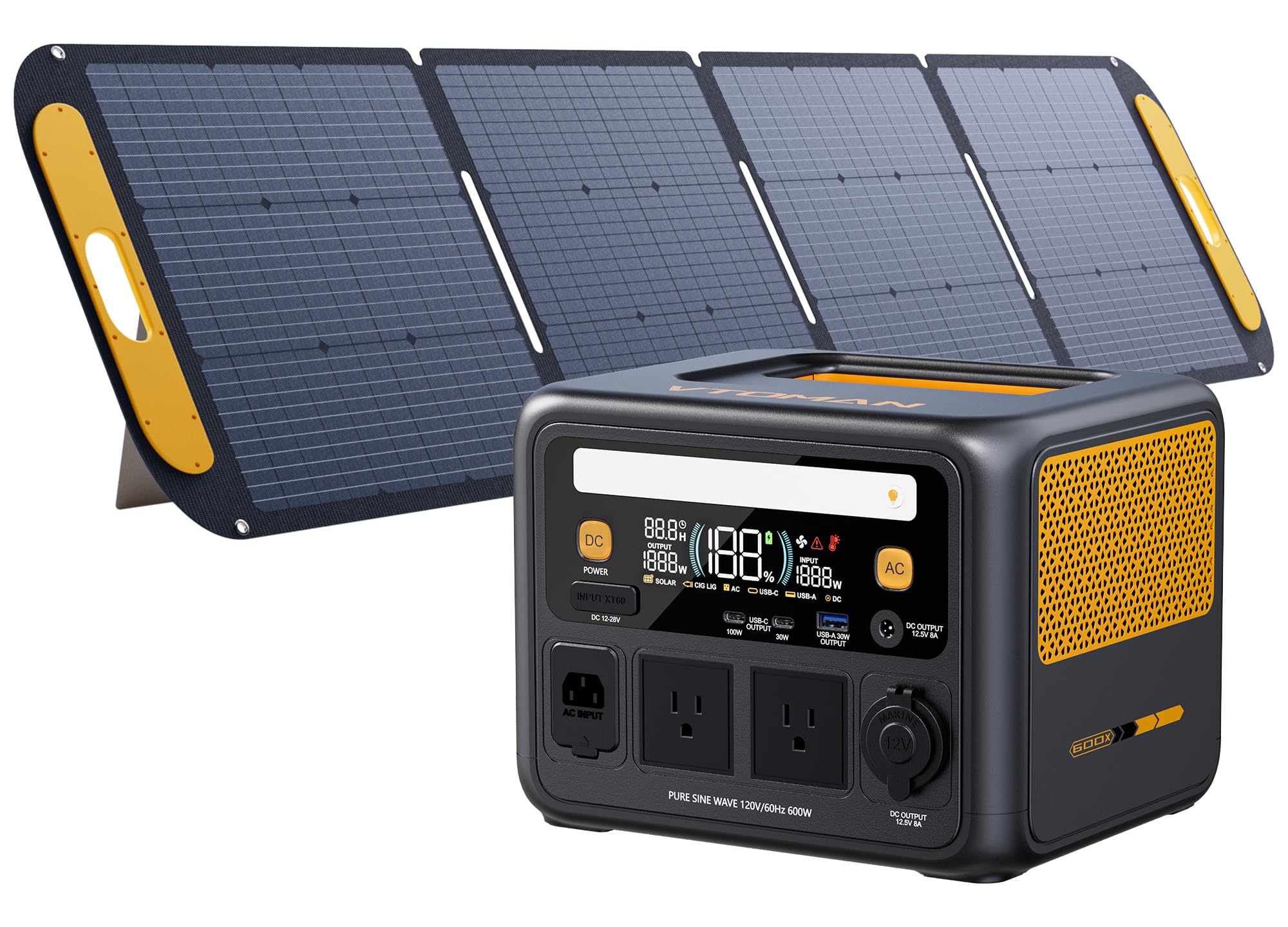
- Includes a foldable 200W solar panel with the 299Wh station.
- Rated for 600W output, with 1200W surge.
- Has a built-in car jump-start port; jumper cables are sold separately.
Best For: Campers who also want a compact emergency power source and car jump-start capability.

BLUETTI AC180
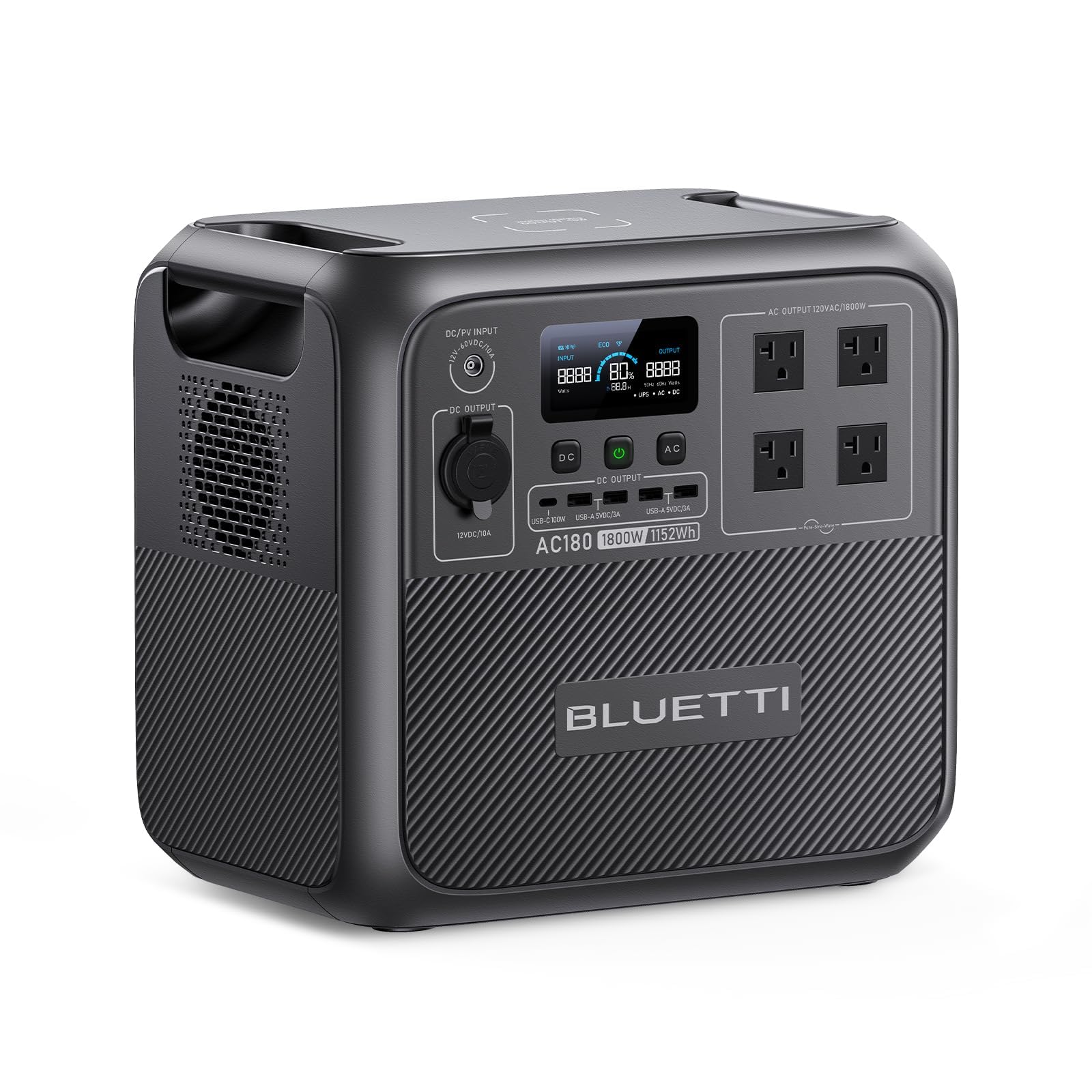
- Stores 1152Wh in a LiFePO4 battery.
- Provides 1800W output with a boost mode up to 2700W.
- Accepts up to 500W solar input.
Best For: Campers who need substantial battery capacity and want to recharge from a compatible solar setup.
EcoFlow DELTA 3 Classic
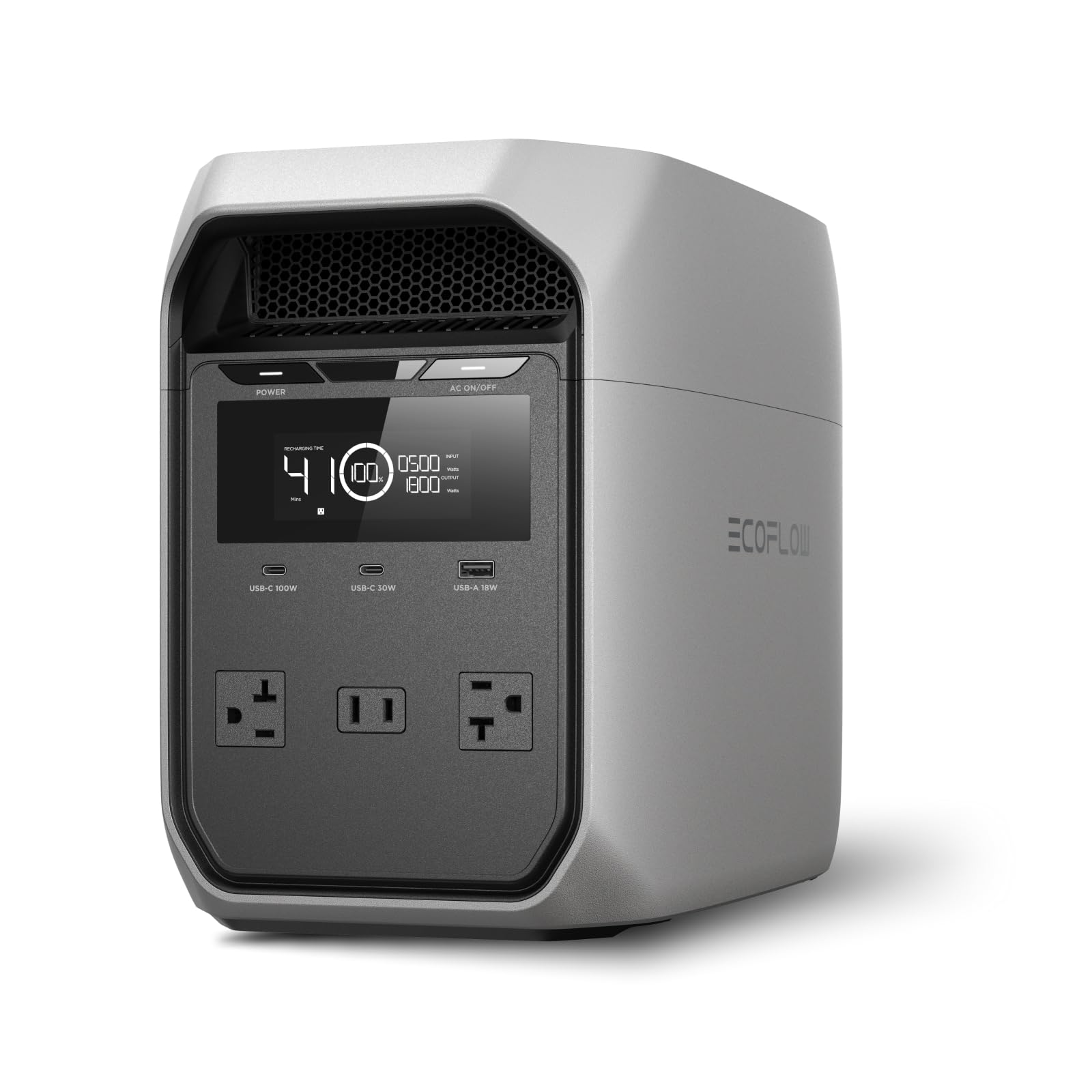
- Has 1024Wh LiFePO4 capacity and 1800W AC output.
- AC charging reaches 80% in 45 minutes.
- A 500W solar panel is optional for solar recharging.
Best For: Campers who want around 1kWh of capacity, fast AC recharging, and app controls.
288Wh LiFePO4 Portable Power Station
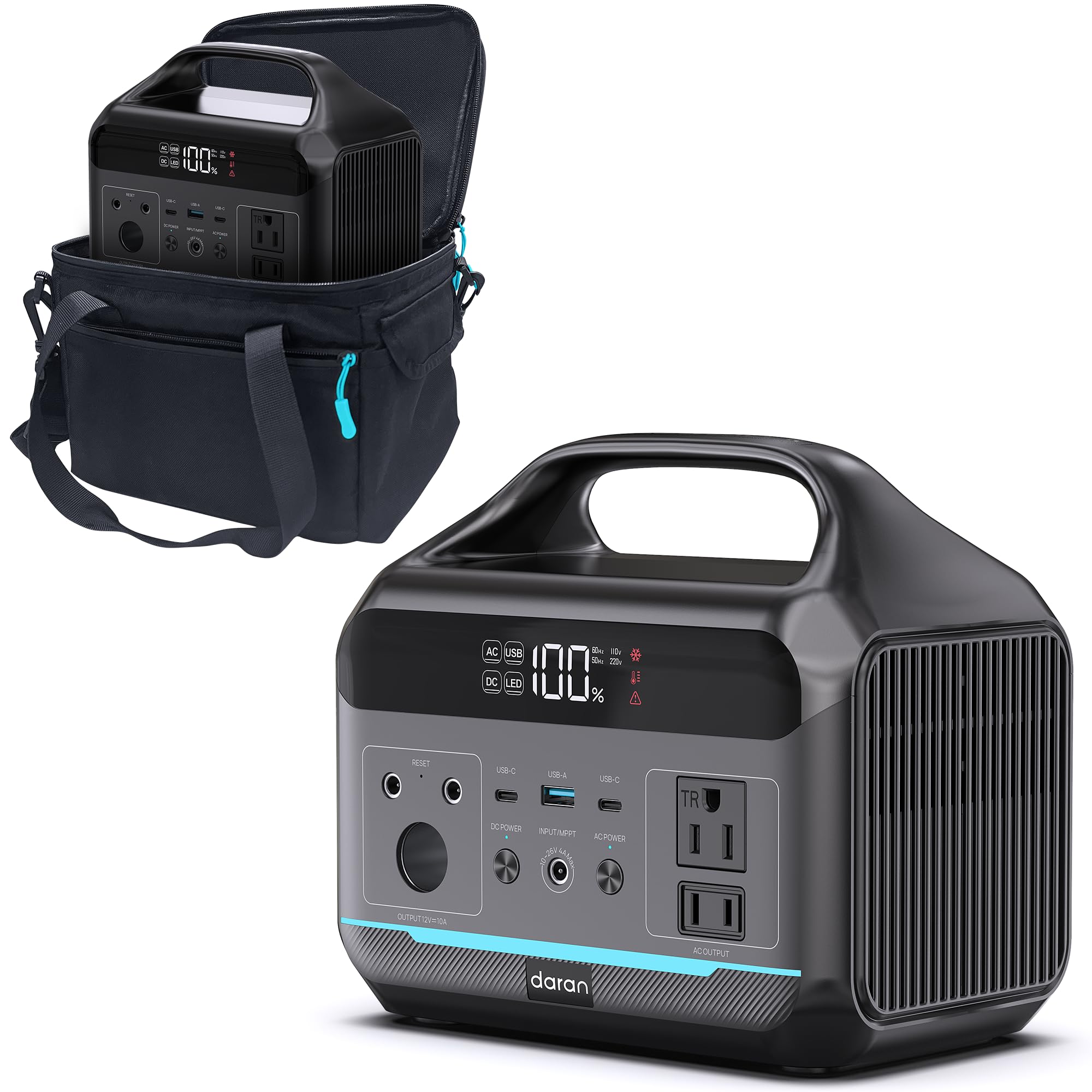
- Stores 288Wh and provides 600W rated output.
- Weighs 8.4 pounds with an ergonomic handle.
- Supports solar input up to 80W; panels and cables are separate.
Best For: Campers who prioritize a light carry and need ports for phones, laptops, and 12V gear.
350W Portable Power Station with 40W Panel
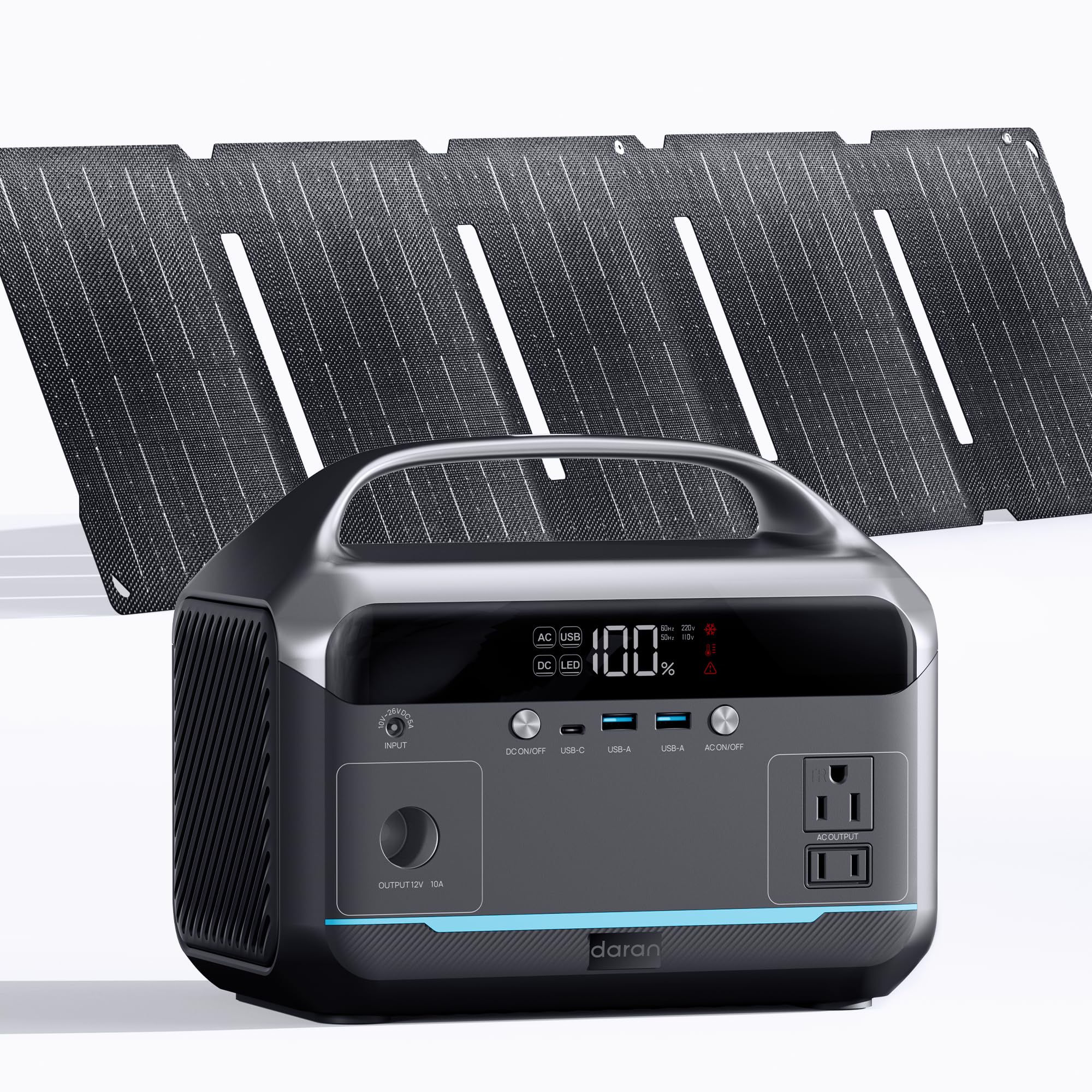
- Includes a foldable 40W solar panel with a 288Wh station.
- Provides 350W pure sine wave AC output with a 600W surge rating.
- The 8.2-pound station includes a four-mode LED light.
Best For: Campers who want a small solar kit for lighting and personal electronics.
VTOMAN Jump 1500X
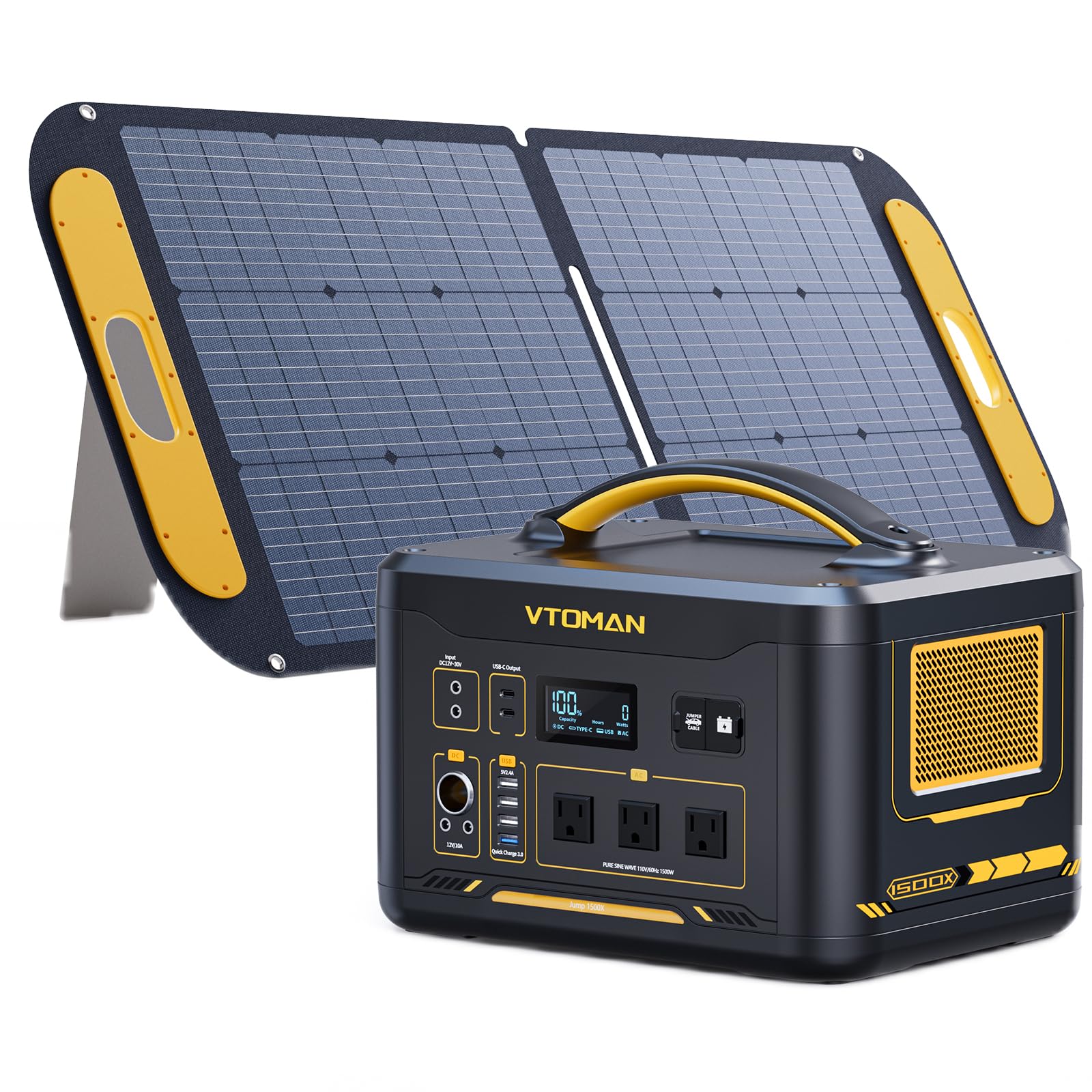
- The bundle includes an 828Wh station and 110W solar panel.
- Provides 1500W continuous AC output and 3000W peak.
- Has two 100W USB-C PD ports.
Best For: RV and car campers who need higher AC output and an included solar panel.
BLUETTI Elite 100 V2
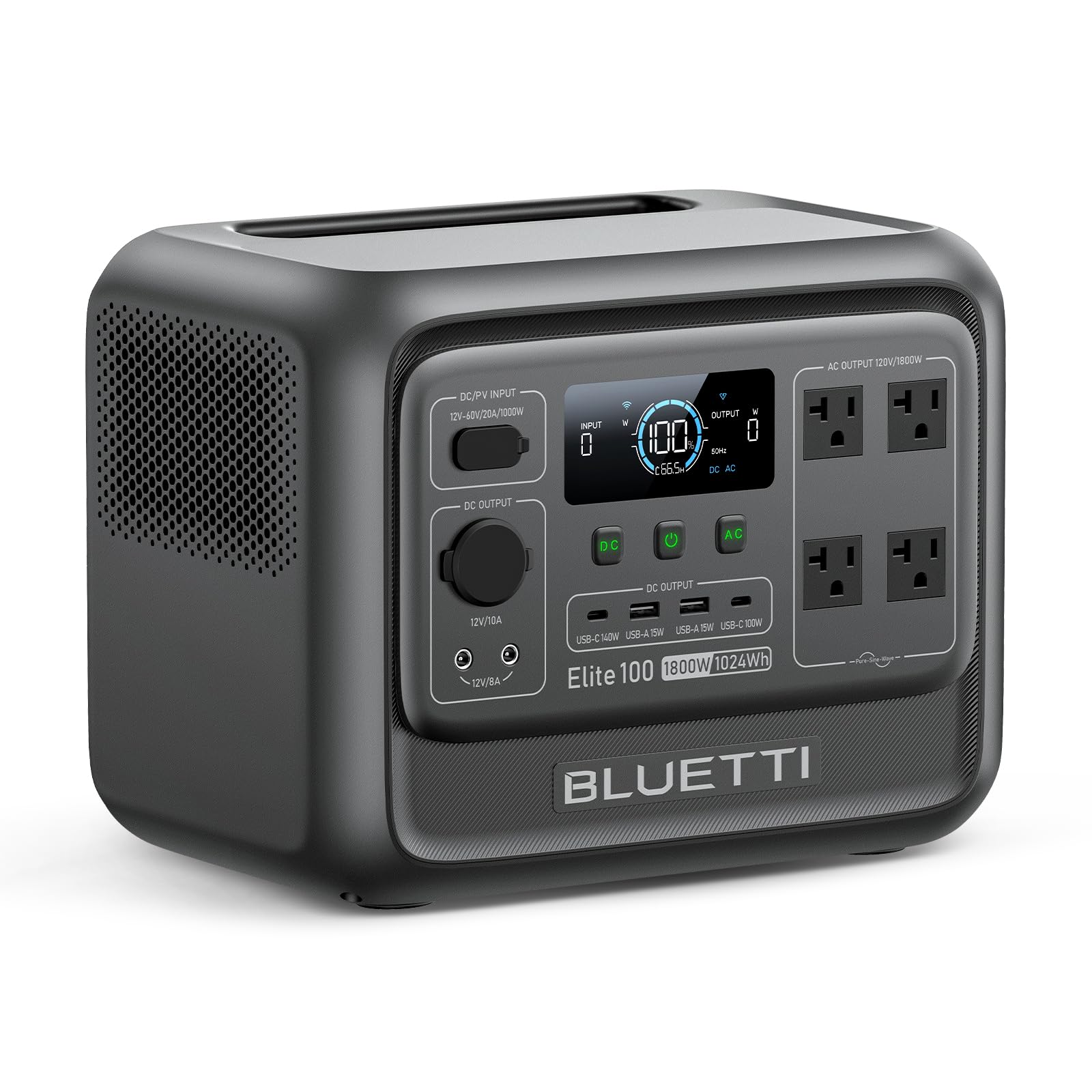
- Has a 1024Wh battery and 1800W rated AC output.
- TurboBoost reaches 80% charge in roughly 45 minutes.
- Weighs 25 pounds and has a 17L design.
Best For: Campers wanting roughly 1kWh of capacity in a comparatively portable station with quiet-mode operation.
EcoFlow DELTA 3 Max
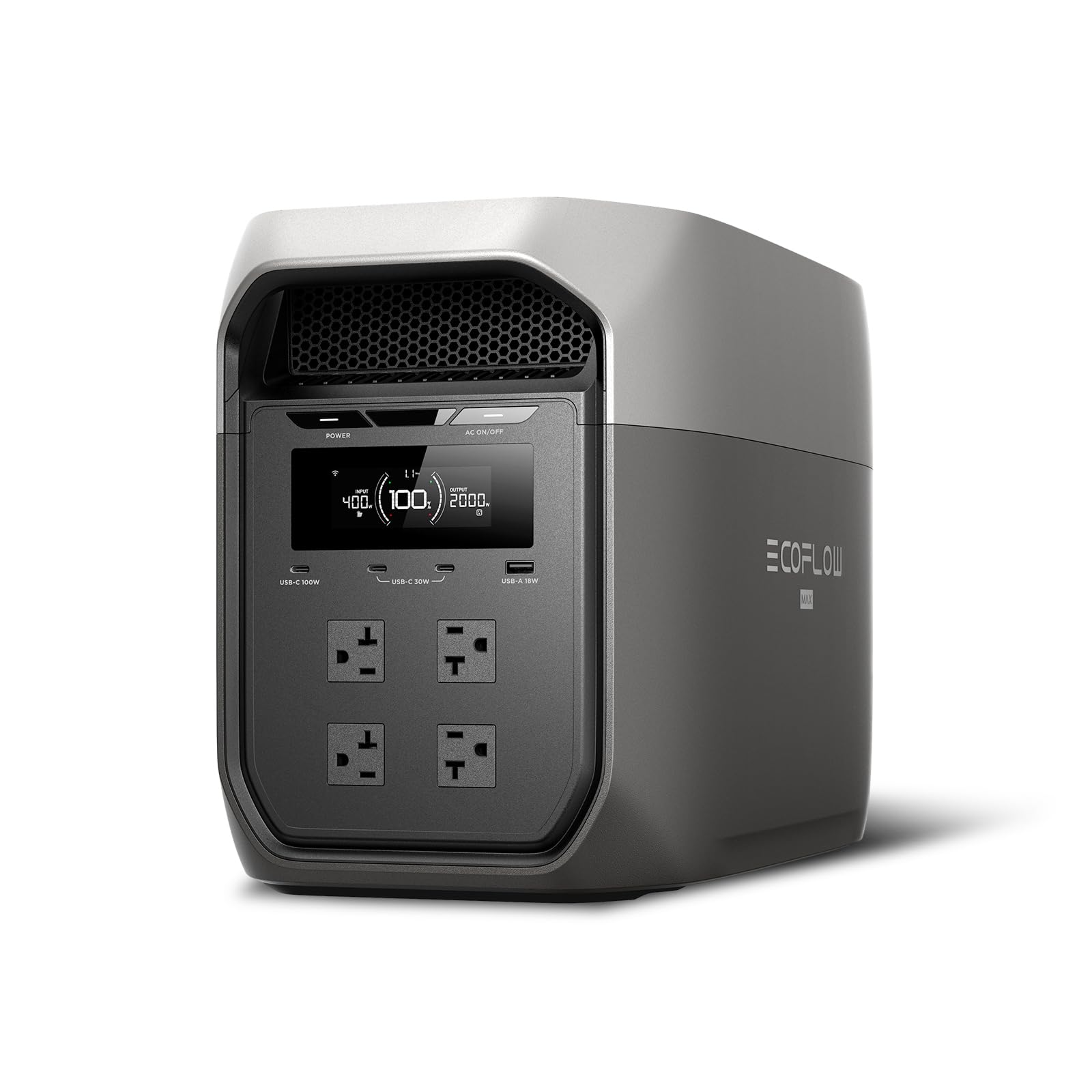
- Stores 2048Wh in a LiFePO4 battery.
- Advertises 3400W X-Boost output.
- Reaches 80% charge in 1.13 hours, according to the title.
Best For: Campers with substantial power needs who can transport a larger station by vehicle or RV.
BLUETTI AC200L
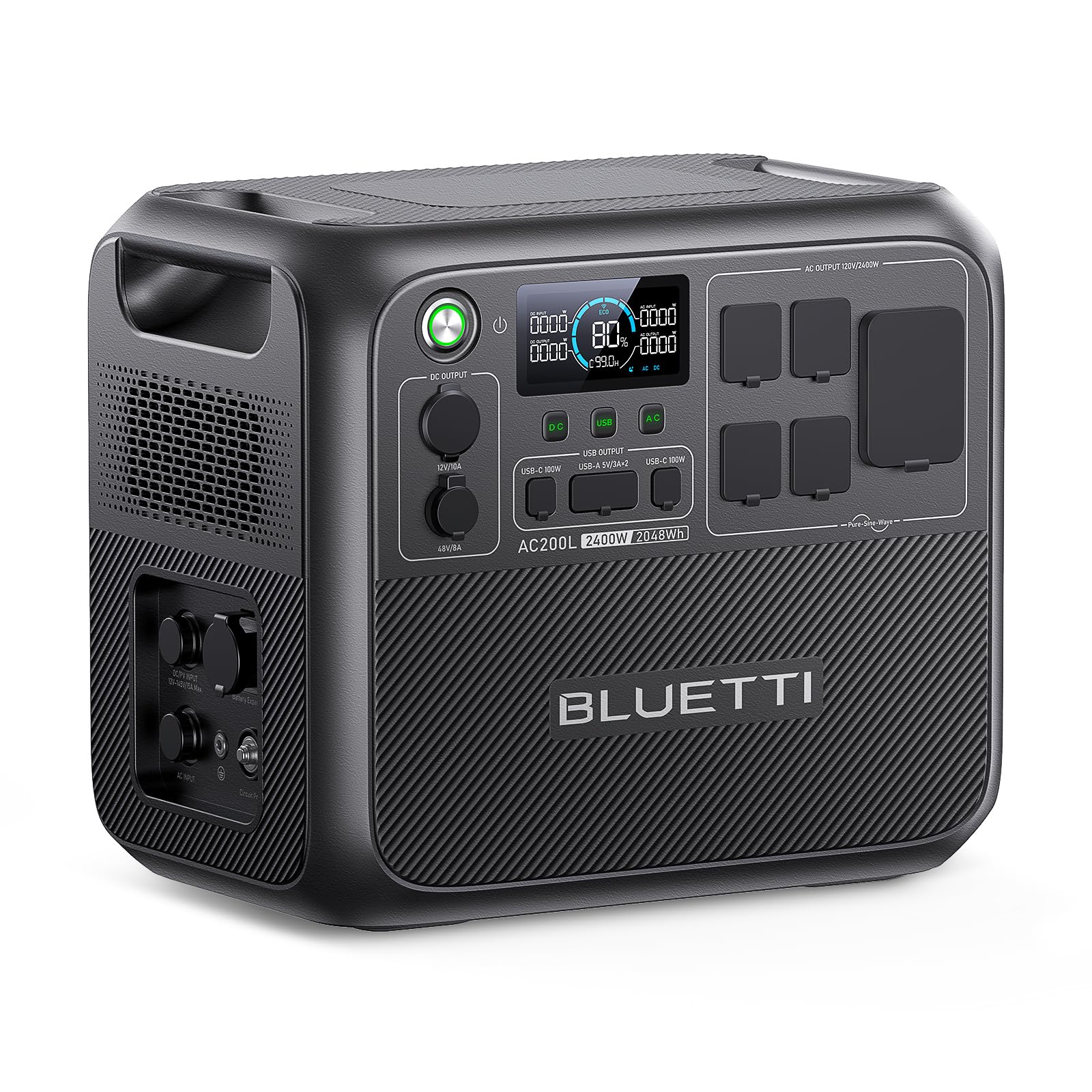
- Has 2048Wh capacity and 2400W output.
- Supports expansion up to 8192Wh with compatible batteries.
- Includes a 30A RV port among its 11 ports.
Best For: RV campers who want a 30A RV connection and room to expand battery capacity.
BLUETTI Elite 30 V2
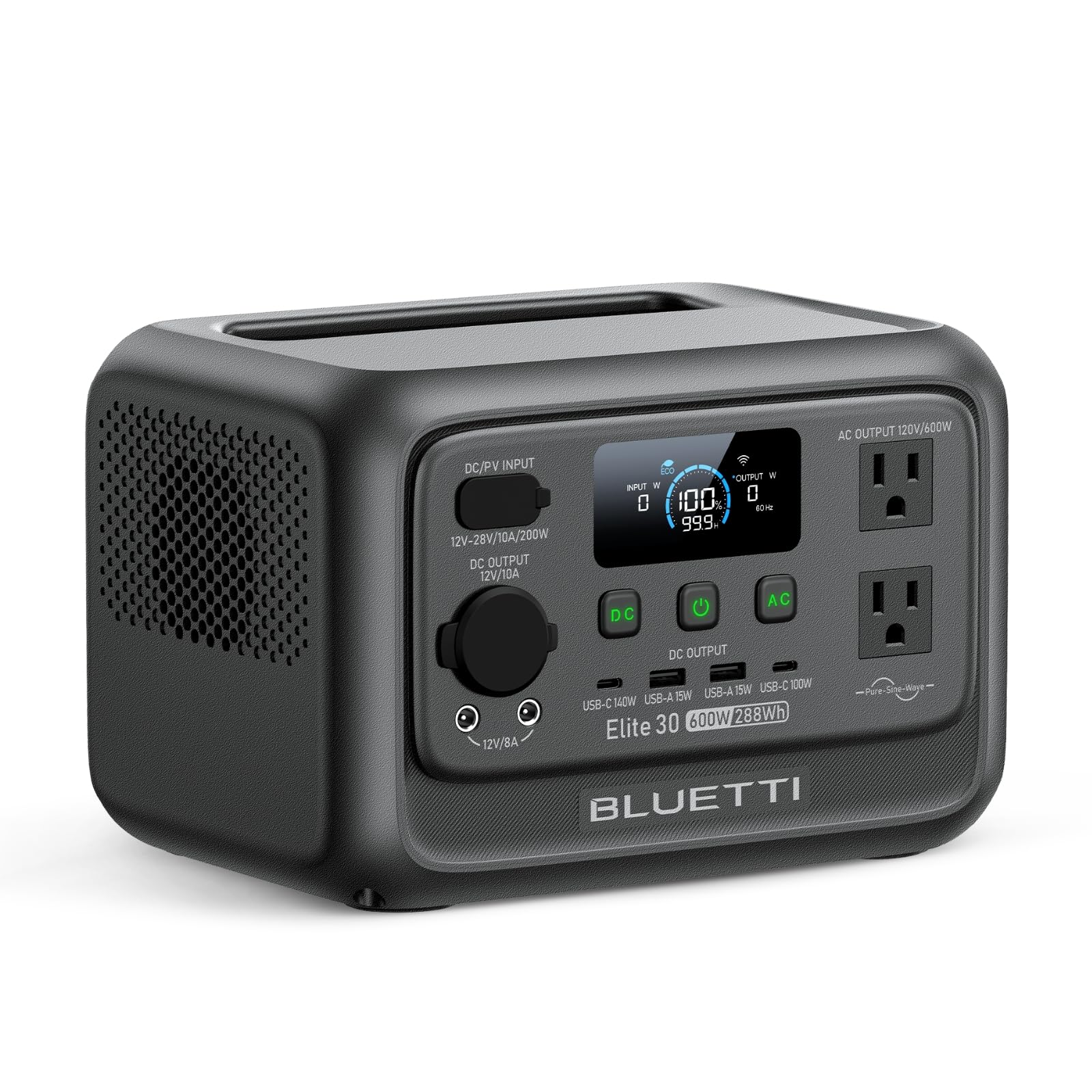
- Has 288Wh capacity and 600W continuous output.
- Weighs 9.4 pounds.
- Wall charging reaches 80% in 45 minutes.
Best For: Car campers who want 600W output in a compact station with fast recharging and quiet operation.
Solar Kit With Car Jump Start
VTOMAN Jump 600X Portable Power Station with 200W Solar Panel, 299Wh Solar Generator with 600W AC Outlets (Surge 1200W) for Outdoor Camping, Vehicle Emergency, Electric Backup, RV, Power Outages
The Jump 600X combines a 299Wh power station with a foldable 200W solar panel, giving campers a ready-made way to recharge off-grid. Its two AC outlets provide rated 600W output, and the multiple USB and DC ports support up to nine devices simultaneously.
The built-in car jump-start port adds roadside utility, though jumper cables are sold separately. Capacity can expand to 939Wh with a separate extra battery.
The station suits shorter trips and modest loads; its starting capacity is lower than the larger stations in this roundup, so check expected runtimes before relying on it for power-hungry gear.
Best For: Campers who also want a compact emergency power source and car jump-start capability.
| Pros | Cons |
|---|---|
|
|
Choose this bundle if you want solar charging and roadside utility in one purchase. Its 299Wh capacity is better suited to smaller devices and shorter power needs than the higher-capacity options here.
The jump-start function adds value only if you also obtain compatible jumper cables. For an extended stay, compare the cost of the separate expansion battery with choosing a larger station upfront.
Mid-Size Capacity With Fast Solar Input
BLUETTI Portable Power Station AC180, 1152Wh LiFePO4 Battery Backup w/ 2 1800W (2700W peak) AC Outlets, 0-80% in 45Min, Solar Generator for Camping, Off-grid, Power Outage
The AC180 pairs a 1152Wh LiFePO4 battery with 1800W output and eight outlets, giving it more capacity and appliance headroom than compact camping stations. Its solar input supports up to 500W, and the product notes give a 2.8–3.3 hour solar charging estimate.
AC charging can reach a full charge in an hour at 1440W input. The station can also provide emergency backup with a 20ms UPS transfer.
No solar panel is identified among the included items, so plan for a compatible panel separately if solar recharging is central to your trip.
Best For: Campers who need substantial battery capacity and want to recharge from a compatible solar setup.
| Pros | Cons |
|---|---|
|
|
The AC180 fits trips where you want a sizable reserve and expect to recharge from a separate solar array or AC power. Its higher capacity and output bring more flexibility than a small station, while the bundle does not include a solar panel.
Check panel compatibility and the outlets required by your equipment before buying. If portability and an included panel matter more than stored energy, consider one of the smaller solar kits.
Fast-Recharging 1kWh Class Station
EF ECOFLOW Portable Power Station Delta 3 Classic, 1024Wh LiFePO4 Battery, 1800W AC/100W USB-C Output, 1 Hr Fast Charge, Solar Generator for Home Backup, Camping & RVs (Solar Panel Optional)
The DELTA 3 Classic offers 1024Wh of LiFePO4 capacity and 1800W AC output, with a 3600W surge figure in the title. Its X-Stream charging is described as reaching 80% in 45 minutes, useful when you have a short stop at a powered site before heading out.
An optional 500W solar panel can recharge it in 2.5 hours. The product notes also identify six outlets, app controls, and a UPS transfer under 10ms.
The solar panel is optional, and the station is listed at 26.7 pounds, so consider transport space and lifting needs for tent camping.
Best For: Campers who want around 1kWh of capacity, fast AC recharging, and app controls.
| Pros | Cons |
|---|---|
|
|
Pick this model if fast AC recharging and app scheduling matter alongside its 1024Wh capacity. It offers 1800W output, with X-Boost for heavier loads, while its 26.7-pound weight makes it less suited to carrying far from a vehicle.
The optional solar panel also adds a separate purchase if you want solar charging. Check whether your camping gear stays within the rated output and whether the station fits your transport setup.
Lightweight Station With Multiple Charging Inputs
Portable Power Station 288Wh LiFePO4 Battery, 600W Power Bank with AC Outlet Fast Charging 8.4LB Lightweight Solar Generator with Multi-Port Output for Outdoor Camping, Travel, and Emergency Backup
This 288Wh station weighs 8.4 pounds and has a 600W rated output, making it a practical middle ground for car camping when you want more capability than a small power bank. Its two USB-C ports include a 100W option, alongside USB-A, car, and DC outputs; it can power up to six devices at once.
Recharge options include wall input, car charging, and solar input up to 80W. Solar panels and cables are not included.
The 288Wh capacity limits how long it can run appliances, so estimate device draw and runtime before counting on it for overnight use.
Best For: Campers who prioritize a light carry and need ports for phones, laptops, and 12V gear.
| Pros | Cons |
|---|---|
|
|
This is a reasonable fit for campers carrying a few electronics and modest 12V equipment, especially when low weight matters. Its 600W rated output gives it more appliance headroom than 100W-class power banks, but 288Wh still calls for careful runtime planning.
Solar recharging is supported, though the panel and cables require separate sourcing. Compare the actual charging ports on your devices with the station's USB-C, car, and DC outputs.
Included Solar Panel for Compact Campsites
Portable Power Station 350W with 40W Foldable Solar Panel, 288Wh LiFePO4 Battery Solar Generator,110V/600W Surge Backup,Outdoor Power Bank for Hurricane Emergency,RV,Camping,Laptops,Off-Grid living
This kit combines a 288Wh LiFePO4 station with a foldable 40W solar panel, so it is ready for basic solar charging without selecting a panel separately. The station provides 350W pure sine wave AC output with a 600W surge rating, plus USB-C, USB-A, and a 12V car port.
It weighs 8.2 pounds and includes a four-mode LED light for nighttime use. Its modest 40W panel and 288Wh battery make it a better fit for small electronics and light camp needs than heavy appliance use.
The car charging cable is not included.
Best For: Campers who want a small solar kit for lighting and personal electronics.
| Pros | Cons |
|---|---|
|
|
Choose this bundle if you want a compact station and panel together for electronics, lights, and other modest loads. The included 40W panel removes a compatibility step, but it offers less solar input than the larger panel kits.
The station's 350W AC rating also rules out higher draw appliances. Check your devices' wattage and whether the panel can be positioned in direct sunlight at your campsite.
Higher-Output Solar Kit for RV Trips
VTOMAN Jump 1500X Portable Power Station with 110W Solar Panel | 828Wh LiFePo4 Solar Generator Kit with 1500W Pure Sine Wave Output, Dual 100W USB-C and MPPT for Home Backup RV Camping
The Jump 1500X bundle includes an 828Wh LiFePO4 station and a 110W foldable solar panel. Its three pure sine wave AC outlets provide 1500W continuous output, with 3000W peak power, and dual 100W USB-C ports support laptop charging.
The station can expand to 2376Wh with a separately sold compatible battery. Multiple input options cover wall, vehicle, and solar charging, while pass-through charging can power connected devices as it recharges.
This capacity and output suit heavier camp loads than a compact power station. Check that you have room to transport the kit and the rated power of appliances you plan to use.
Best For: RV and car campers who need higher AC output and an included solar panel.
| Pros | Cons |
|---|---|
|
|
This bundle suits vehicle based camping where you want a panel, more output, and more stored energy than a compact station provides. Its 1500W continuous rating accommodates a broader set of loads, while the 110W panel is smaller than the panels paired with some larger stations.
Expansion offers a path to more capacity but adds a separate purchase. Check the appliance's continuous and startup requirements against the station's rated and peak output.
Compact 1kWh Station With Quiet Mode
BLUETTI Elite 100 V2 Portable Power Station for Camping 1024Wh 1800W
The Elite 100 V2 combines a 1024Wh LiFePO4 battery with 1800W rated output and 2700W Power Lifting. It weighs 25 pounds, and BLUETTI gives a compact 17L design figure, making it more portable than larger two-kilowatt-hour stations while still requiring a deliberate lift.
TurboBoost AC charging reaches 80% in about 45 minutes. Silent mode is rated at 30dB, and the station includes an 11-port layout and app connectivity.
The solar charging cable is included, but the product notes do not identify a solar panel, so check panel compatibility and purchase needs for off-grid recharging.
Best For: Campers wanting roughly 1kWh of capacity in a comparatively portable station with quiet-mode operation.
| Pros | Cons |
|---|---|
|
|
The Elite 100 V2 balances around 1kWh of capacity with a smaller footprint than the largest stations here. Its quiet mode and rapid AC charging may suit established or vehicle-accessible campsites where noise and recharge windows matter.
At 25 pounds, it is not a backpacking power source. Solar support requires checking panel compatibility, since a charging cable is included but a panel is not identified in the package.
2048Wh Capacity With X-Boost Output
EF ECOFLOW Portable Power Station DELTA 3 Max, 2048Wh LiFePO4 Battery, Solar Generator (Solar Panel Optional), 3400W X-Boost Output, Ultra-Fast 0-80% Charging in 1.13 Hr, Home Backup & RV Camping
The DELTA 3 Max is a high-capacity option with 2048Wh of LiFePO4 storage and an advertised 3400W X-Boost output. That combination makes it relevant to RV camping and larger camp loads, while its 0–80% AC charging estimate of 1.13 hours can reduce time at a powered stop.
The product notes also give under-10ms transfer time and app-based energy monitoring. A solar panel is optional, and the notes do not specify the station's weight or port count.
Treat the 3400W figure as X-Boost mode and verify that each appliance is compatible with the station's operating limits.
Best For: Campers with substantial power needs who can transport a larger station by vehicle or RV.
| Pros | Cons |
|---|---|
|
|
Choose the DELTA 3 Max for vehicle-based camping when substantial stored energy and high-output mode matter more than a light carry. The 3400W figure is tied to X-Boost, so check the appliance's requirements and the manufacturer's operating guidance rather than treating it as a universal continuous rating.
Solar charging requires an optional panel. The missing weight and outlet details are useful to confirm before planning transport or simultaneous device use.
Expandable Capacity With RV Outlet
BLUETTI AC200L Portable Power Station, 2048Wh LiFePO4 Battery Backup, Expandable to 8192Wh w/ 4 2400W AC Outlets (3600W Power Lifting), 30A RV Output, Solar Generator for Camping, Home Use, Emergency
The AC200L offers 2048Wh of LiFePO4 capacity and 2400W output, with expansion support up to 8192Wh using compatible battery packs. Its 30A RV port and 48V/8A DC port make it particularly relevant to RV setups, while 11 ports cover mixed charging needs.
AC charging supports up to 2400W input, reaching 80% in 45 minutes; solar input up to 1200W has a stated full-charge estimate of 1.7–2.2 hours. The product does not include a solar panel.
For ordinary tent camping this capacity and expandability may be more than needed, so consider transport and power requirements before choosing it.
Best For: RV campers who want a 30A RV connection and room to expand battery capacity.
| Pros | Cons |
|---|---|
|
|
The AC200L makes the most sense for RV users who can use its 30A port and may want to add compatible batteries later. Its 2048Wh base capacity and 2400W output provide a substantial reserve, but the system is more than many tent campers need to transport.
Solar charging requires a compatible panel, and expansions add cost and equipment. Check RV connection requirements and the dimensions and weight before committing to a storage plan.
Portable 288Wh Station With UPS
BLUETTI Elite 30 V2 Portable Power Station 600W (Power Lifting 1500W), 288Wh LiFePO4 Battery with 10ms UPS, Emergency Backup Power for Home Blackout/Winter Storm, Solar Generator for Camping/Road Trip
The Elite 30 V2 pairs 288Wh of LiFePO4 capacity with 600W continuous output and a 1500W Power Lifting mode. At 9.4 pounds, it is relatively manageable for car camping, and its 380W wall charging can reach 80% in 45 minutes.
The product notes also give a 10ms UPS function and list solar and car charging support. The compact capacity is best suited to lights, phones, laptops, and other limited loads rather than long appliance runtimes.
No solar panel is identified among the included items, so verify what compatible charging equipment you need for off-grid use.
Best For: Car campers who want 600W output in a compact station with fast recharging and quiet operation.
| Pros | Cons |
|---|---|
|
|
This station fits car campers who want a modest load capability and a manageable carry, plus fast wall recharge before departure. The 600W continuous rating is more useful for small appliances than a 100W mini station, but battery capacity remains limited for extended use.
Power Lifting is a special mode, so check your appliance's compatibility. If solar charging is part of your plan, confirm the panel and cable requirements before buying.
How to Choose Power Stations For Camping
How We Picked Power Stations for Camping
We selected standalone power stations that suit camping through a useful mix of battery capacity, AC output, portability, and charging options. The roundup includes compact units for phones and lighting, mid-size stations for laptops and small appliances, and larger choices with RV-specific connections or battery expansion.
Included solar panels make a kit more ready for off-grid use, while panel input ratings and battery capacity shape how useful solar charging can be. We also favored different practical roles, such as a built-in jump-start port, quiet mode, rapid AC charging, and multiple device outputs.
Expansion batteries and whole-house backup units did not qualify as general-purpose camping stations.
Comparing Camping Power Station Capacity and Output
The compact models in this guide store 288Wh or less and are easier to carry, but they need more careful runtime planning. A 288Wh battery may cover personal electronics and lighting, while a laptop, cooler, CPAP, or other appliance can use that reserve much faster.
Check both the station's watt-hour capacity and the device's running draw.
The 1kWh class offers more flexibility for car camping and overnight needs. The AC180, DELTA 3 Classic, and Elite 100 V2 add higher AC output and larger reserves, while the DELTA 3 Max and AC200L extend capacity for RV or heavier-use setups.
Compare rated output with an appliance's startup demand; special surge or boost modes have specific operating limits.
| Product | Standout features | Best for |
|---|---|---|
| VTOMAN Jump 600XCheck Price |
| Campers who also want a compact emergency power source and car jump-start capability. |
| BLUETTI AC180Check Price |
| Campers who need substantial battery capacity and want to recharge from a compatible solar setup. |
| EcoFlow DELTA 3 ClassicCheck Price |
| Campers who want around 1kWh of capacity, fast AC recharging, and app controls. |
| 288Wh LiFePO4 Portable Power StationCheck Price |
| Campers who prioritize a light carry and need ports for phones, laptops, and 12V gear. |
| 350W Portable Power Station with 40W PanelCheck Price |
| Campers who want a small solar kit for lighting and personal electronics. |
| VTOMAN Jump 1500XCheck Price |
| RV and car campers who need higher AC output and an included solar panel. |
| BLUETTI Elite 100 V2Check Price |
| Campers wanting roughly 1kWh of capacity in a comparatively portable station with quiet-mode operation. |
| EcoFlow DELTA 3 MaxCheck Price |
| Campers with substantial power needs who can transport a larger station by vehicle or RV. |
| BLUETTI AC200LCheck Price |
| RV campers who want a 30A RV connection and room to expand battery capacity. |
| BLUETTI Elite 30 V2Check Price |
| Car campers who want 600W output in a compact station with fast recharging and quiet operation. |
Solar Charging and Off-Grid Camping
A power station with a bundled panel can simplify a first camping setup. The VTOMAN Jump 600X includes a 200W panel, the Jump 1500X includes a 110W panel, and the compact 350W kit includes a 40W panel.
A larger panel rating can accept more solar input when conditions allow, but sunlight, panel placement, and the station's supported input all matter.
Several stations support solar charging without including a panel. Confirm the panel's voltage range, connector, and the station's maximum solar input before buying.
Also plan for the time needed to recharge: a station with a large battery can store more energy but generally needs more input to refill it during a short stop.
Choosing a Portable Power Station for a Campsite
Weight matters when the vehicle cannot reach the final campsite. The compact choices here weigh roughly eight to nine pounds, while the Elite 100 V2 weighs 25 pounds and the DELTA 3 Classic 26.7 pounds.
Larger RV-oriented models may be best transported in a vehicle and kept near the loads they power. Check dimensions and handling needs along with battery capacity.
Count the ports your group will use at the same time. USB-C charging can simplify laptop power, AC outlets serve compatible household plugs, and a 12V car or DC output may suit coolers and lights.
Do not assume every outlet can provide its maximum power simultaneously; check the station's output limits and your devices' requirements.
Which Camping Power Station Fits Your Trip?
For a short car-camping trip centered on phones, lights, and cameras, consider a compact 288Wh model and prioritize weight or an included panel. The Jump 600X is a distinctive option if roadside jump-start capability matters, while the 40W-panel bundle is a straightforward small solar kit.
For laptops, small appliances, or longer vehicle-based trips, compare the 1kWh choices by output, charging speed, and panel needs. RV users should look closely at the AC200L's 30A connection and expansion support.
Before choosing, list each device, its wattage, and how many hours you expect to use it; then allow for charging losses and any solar downtime.